Scaling Across Markets with Next-Generation 2D Barcodes
Free
Sign up for our Newsletter

Manitoba’s collaborative community continues to be a driving force behind one of the largest independent bus manufacturers in the world.
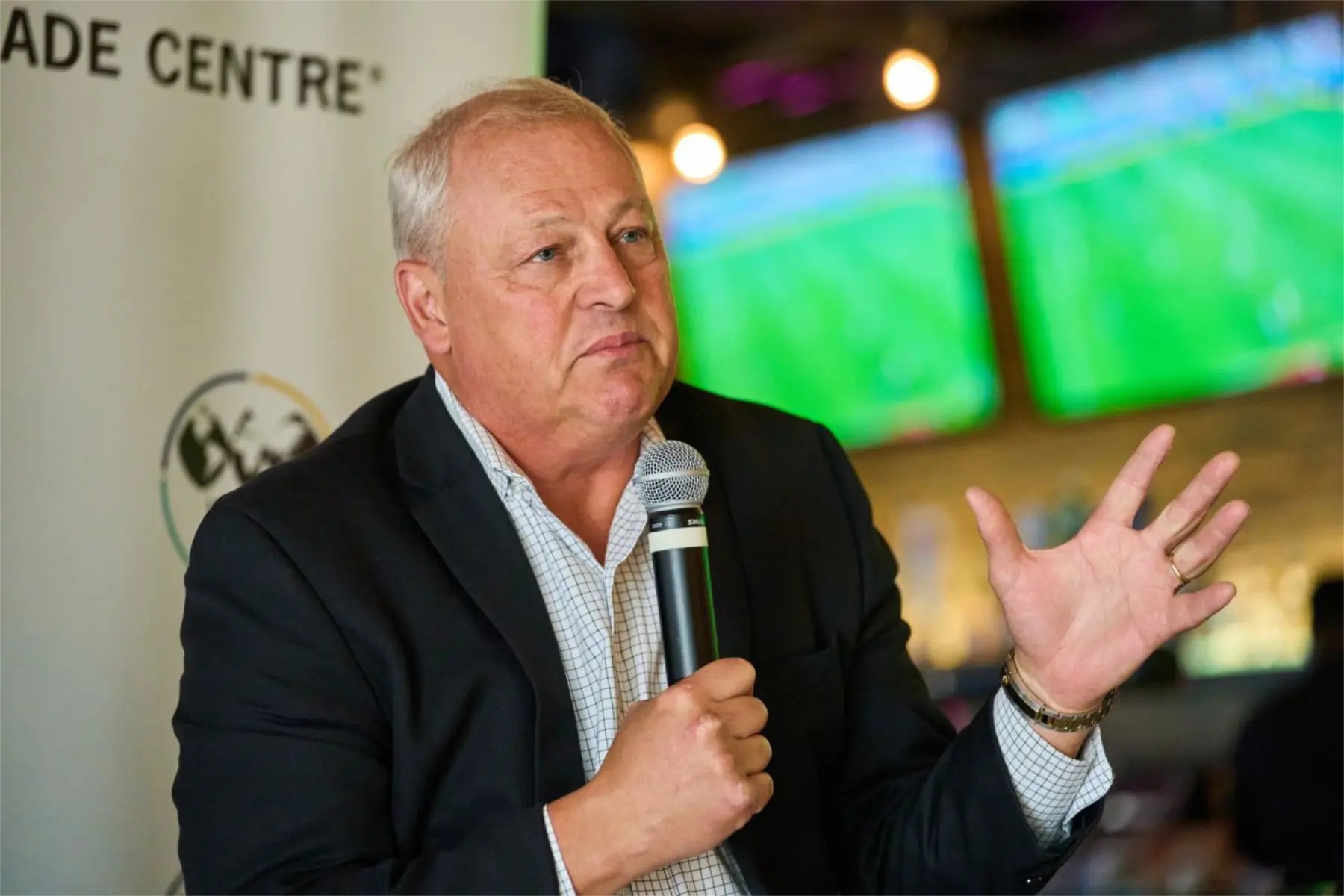
Paul Soubry, recently retired president and CEO of NFI Group, shared his insights during the final WTC Talks event of the season.
Hosted by World Trade Centre Winnipeg, WTC Talks is a monthly gathering that celebrates Manitoba entrepreneurs and creates connections within the business community by sharing stories of trade and growth. The June 17 event — supported by Manitoba Chambers of Commerce, Canadian Manufacturers & Exporters and DPD Software — took place at La Roca.

Soubry led NFI Group from 2008 to early 2026, steering the company to become a recognized worldwide leader in bus and motor coach manufacturing while also leading the way in zero-emission mobility.
Reflecting on his early years, Soubry always knew that he wanted to be involved in the business world.
“I never saw myself as an entrepreneur but more operating and running a business — so that’s what I did.”
The company itself launched in 1930 and evolved over the years by acquiring multiple other businesses, including Manitoba manufacturer Motor Coach Industries. Today, NFI Group employs about 9,500 people, with around 3,200 based here in Winnipeg.
“We went from a transit bus business to one of the largest independent global bus makers on the planet,” said Soubry, who also spent 24 years with StandardAero.
During his time in the driver’s seat for NFI Group, Soubry navigated many ups and downs that include leading the company through the pandemic when they refinanced eight times in two years.
“We went through hell with COVID and supply chain. We lost half a billion U.S. dollars in 26 months and we went through $680 million of cash,” he said. “The whole dynamic of COVID screwed up the way you build something and the entire supply chain.”
More recently, the company has tackled tariff-related challenges, which can be particularly tricky when multiple border-crossings are involved throughout the manufacturing process. As an example, Soubry said they have engines that are made in New York and shipped to Canada. After that, the engines are assembled in a bus that goes back to the United States.
“Now it’s got tariffs on the whole thing again,” he said. “So the cost of the bus has gone through the roof, which then drove all the financial turmoil.”
The industry continues to evolve, with a current shift towards the electrification of buses. Soubry said that nearly half the buses they sold last year were either electric or fuel cell electric.
“We can actually impact the environment. If you take one diesel bus off the road and put one electric on, it’s a dramatic impact on the environment.”
Looking ahead, the future is bright for NFI Group, which recently launched a new Winnipeg-based manufacturing facility that is building buses from start to finish for Canadian distribution.
“Now we’re building full Canadian buses for Canadian customers with Canadians here in Winnipeg, which is great.”
Even though he has now handed over the reins, Soubry continues to be involved as an advisor at NFI Group while also sitting on several boards. Based on his broad experience, he appreciates the unique nature of Manitoba’s business community, which tends to collaborate in ways that might not happen in a bigger city.
“I’ve had the opportunity of probably being in about 90 countries and I’ve worked in lots of places, but what we have here is this little melting pot where people fundamentally give a shit about our community. That’s part of the magic here,” he said.
“That’s what’s so cool about Manitoba — if you really want to be involved, it’s available. The connections are certainly an advantage to being a smaller community.”