Trade Show Optimization Workshop
Free
Sign up for our Newsletter

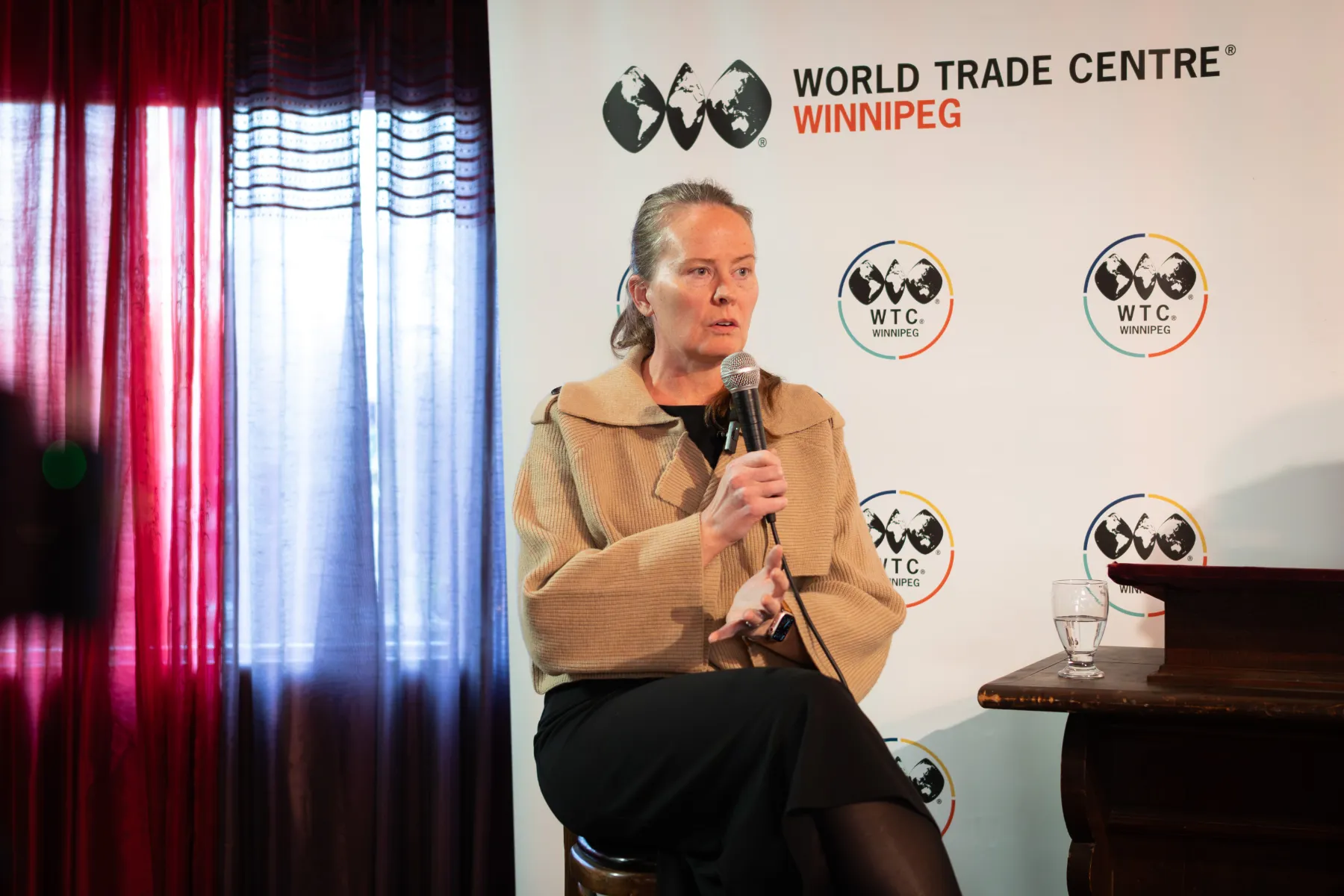
A Manitoba-based flaxseed company didn’t just crop up overnight — its roots run five generations deep.
Mary Ekman grew up on the family flaxseed farm started by her great-grandfather near Russell in western Manitoba. Today, she is the CEO of Pizzey Flax, which features a 40,000-square-foot facility and onsite laboratory to help serve its customers across North America and beyond.
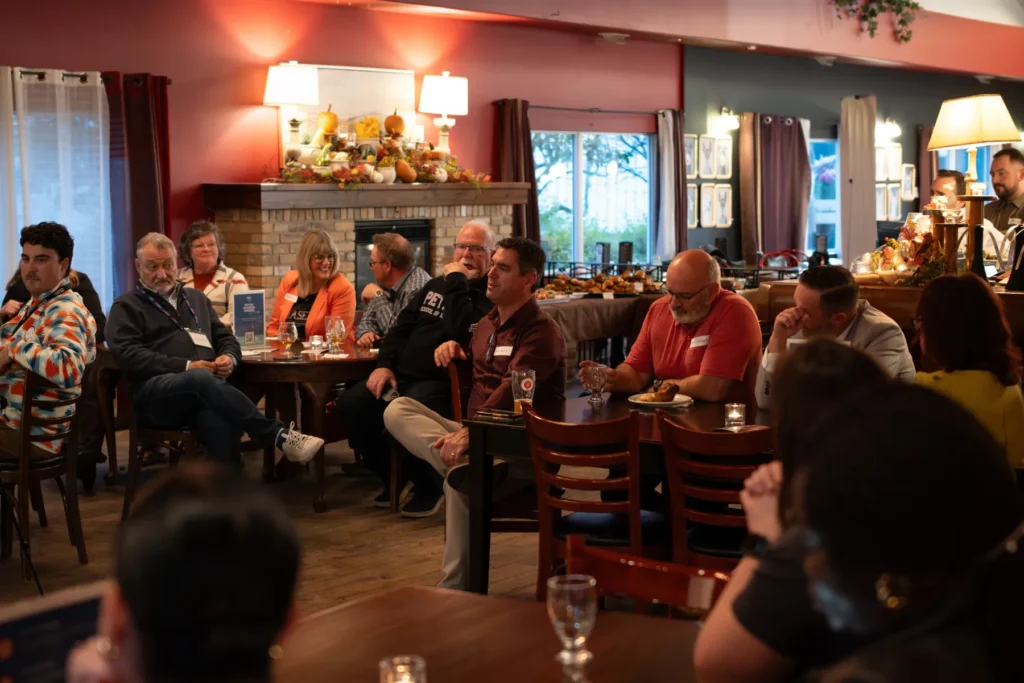
On October 14, Ekman shared her story at Brandon’s first WTC Talks event, which took place at Lady of the Lake Restaurant. Hosted by World Trade Centre Winnipeg, WTC Talks is a monthly gathering that celebrates Manitoba entrepreneurs and creates connections within the business community by sharing stories of trade and growth. Thank you to the Manitoba Chambers of Commerce and BDC for their support of the October event.
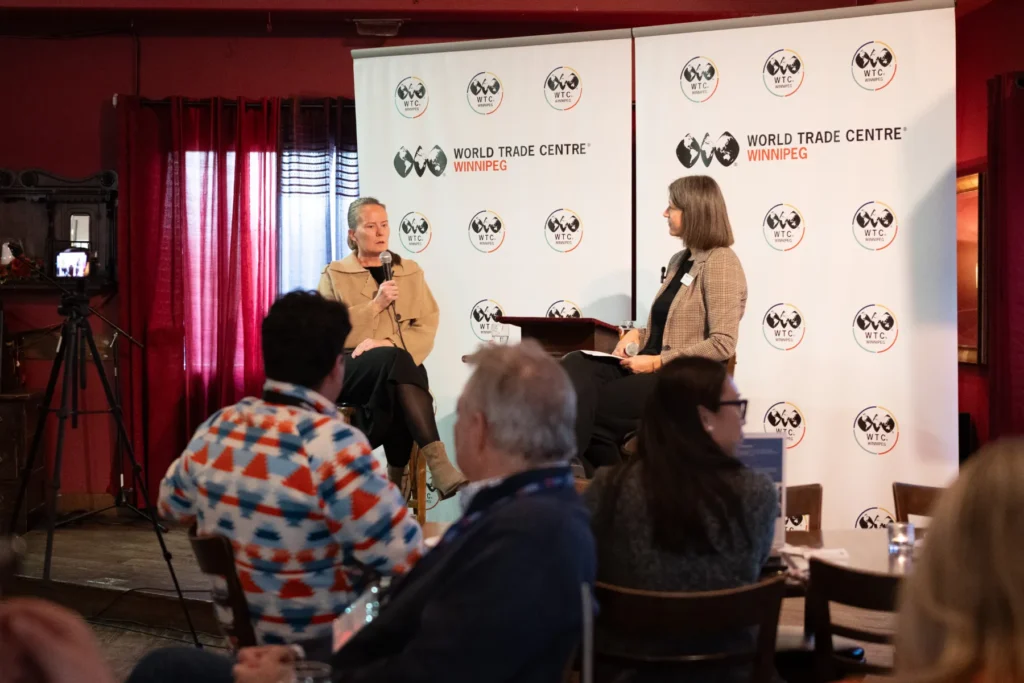
Ekman’s parents, Glenn and Linda Pizzey, dedicated their time and efforts to the family farm. Glenn was a director on the Flaxseed Council of Canada, a national organization to promote Canadian flax that was mainly focused on industrial purposes at the time.
However, Glenn soon realized flaxseed also had many health benefits that hadn’t been tapped into yet. He began exploring these health benefits in an effort to develop a market in the food industry.
“About the same time, he was contacted by a supplier who was supplying into the pet food market,” Ekman added. “They wanted a supplier of flaxseed that they would work with on an ongoing basis.”
On the human nutrition side, Linda began baking flax bread and giving it away to neighbours. Encouraged by the positive response, she started selling it at farmers markets in Russell before moving onto the “big league” markets in Brandon and St. Norbert.
“Before long, she was making 1,000 loaves of flax bread a week by hand, selling out every time,” said Ekman, who helped her mom with the enterprise. “We were out of bread by 10 a.m.”
Before long, Linda realized she needed to expand to keep up with the demand. In a health-approved room in their home, she continued to bake her popular bread non-stop.
“We’d come home from school and there was bread everywhere,” Ekman recalled. “It was an interesting time.”
Due to the distance, it was challenging to get the bread to larger markets while it was still oven-fresh. Over time, Linda decided to sell a bread mix so people could bake the loaves themselves. Canada Safeway picked up the product, which Linda sold under a brand called Country Ovens. Safeway bakers used the mix to bake their own flax bread, but Linda eventually realized their baking methods weren’t consistent across the country.
Once again, the business pivoted to focus on selling flaxseed as a sole ingredient rather than as a component in a bread mix.
“By the mid ‘90s, we were selling it to major brands. We had Maple Leaf bread here in Canada. We had Dempster’s bread in Canada, which was national,” Ekman said.
“And, of course, since a lot of manufacturing happens in the United States, that’s where a lot of our base really took off.”
After several name changes along the way, the company rebranded a few months ago to Pizzey Flax with a continued focus on flaxseed. Ekman serves as chief executive officer, leading the business development team and spearheading product development. Although most of their sales are business to business, they also offer a consumer brand called Manitoba Flax.
Prior to coming back to the family business, Ekman attained a bachelor of science degree in food science from North Dakota State University and a master of business administration from the University of Phoenix. After that, she worked for several U.S. food companies — but she never envisioned herself leading the family venture.
“I actually never intended to come back to the business at all,” she said. “Anyway, here I am.”
The move turned out to be a positive one for Ekman — and for Pizzey Flax.
“In a tiny company, you wear a number of hats,” she said. “That’s actually one of the things I’ve enjoyed the most in working for a small family business. We all do everything. There’s a lot of exposure.”
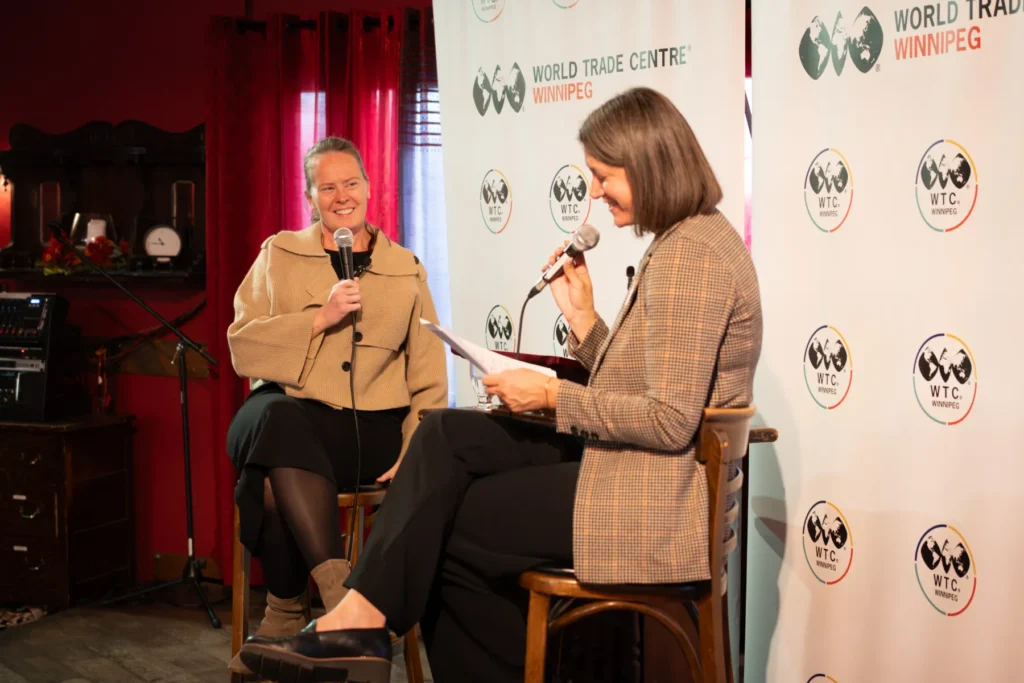
Over the years and decades, the business has continued to grow incrementally along with its customers.
“We’ve never said no to a customer,” Ekman said. “In fact, sometimes it feels daunting, like we’re promising more than we can deliver on, but we just added on.”
This adaptable approach allowed them to focus on the nutritional aspects of flaxseed, including Omega 3, fibre and protein. More recently, their attention has expanded to include the fully functional aspects of flaxseed, which can be used as a replacement for guar gum, xanthan gum and eggs.
“The last two years, when egg prices have been all over the place here and in Europe and in the U.S., some major brands have actually looked at us as a cost savings to eggs,” she said.
“So that’s how we’re marketed. We’re marketed primarily as nutrition, but this whole functional side of the business is really starting to gain a lot of traction.”
From its humble beginnings on the family farm near Russell, Pizzey Flax now reaches a worldwide market. The family continues to grow about 2,000 acres on the family farm, and they also contract other flax farmers in Saskatchewan, Manitoba and Minnesota to meet the demand.
“International sales are hugely important to us. About 70 per cent of our sales are probably into the United States. The rest, almost all is into Europe and the U.K.,” Ekman said.
“Canada is a small amount, not by choice. It’s just that most of the manufacturing for markets we’re in happens in the U.S. … One thing that has changed over the last 30 or 35 years is that our Canadian customer base has been dwindling a little bit, and it’s because of manufacturing.”
So far, their product hasn’t been tariffed but they’ve still experienced some delays at the border. As an overall business approach, they try to have enough foresight to anticipate the changing needs of the food industry and their customers.
Reflecting on the journey and looking ahead to what’s to come, Ekman expressed gratitude for their dedicated workers as well as the vendors who have become important extensions of the team.
“The future is bright,” she said. “Maybe that’s too elementary to say, but it really is.”
And for her younger self, she would share a few wise words based on her experience.
“It’s OK to have to work hard.”